
Larimer County Resident Lookup Scope
There is no official single index for every current Larimer County resident. A useful resident lookup starts by matching the record to the claim. The Assessor and GIS can locate an assessed owner or parcel. The Clerk & Recorder can show a recorded instrument. A court docket shows a scheduled hearing, not a complete case file. Voter, vital, law-enforcement, business, and license systems each have their own fields and limits.
| Record | What It Confirms | Where | Access |
|---|---|---|---|
| Assessor owner data | Assessed owner, mailing fields, parcel and tax details | Larimer Assessor Property Search | Public assessment data |
| Parcel and map data | Situs, parcel shape, account and map-linked owner clue | Larimer GIS viewer | Public map; identify features |
| Recorded instruments | Grantor, grantee, reception number, date and legal description | Landmark Web | Index public; images vary by account and fee |
| Court hearing docket | Scheduled event, case number, party and courtroom | Larimer docket search | Public hearing finder; copies by request |
| Vital records | Eligible birth, marriage, death or divorce record | Larimer birth route and CDPHE | Confidential; eligibility and ID rules apply |
| Voter records | Registration match or county election data | Colorado voter lookup | Public fields and reports have exclusions |
| Business or license filing | Entity, trade-name or public license connection | Colorado SOS and DORA verification | Public filing or board record |
Use the strongest first source for the purpose. An owner question points to the Assessor, GIS, and Recorder. A hearing question points to the Colorado Judicial Branch. A birth or marriage question starts with eligibility. A historical resident search belongs in directories, newspapers, cemetery books, and local archives. Current custody clues belong to the Sheriff, Colorado Department of Corrections, or CBI, never to a general name assumption.
Define a Larimer Resident Match
Before running a Larimer County resident lookup, write down the identity target and the date range. Record a legal name, middle initial, former name, nickname, business name, municipality, known address, parcel, case number, or family link. A common name needs at least one second anchor. A ZIP can help with the Colorado voter lookup, but a ZIP alone does not establish a household or an occupant.
The evidence ladder changes with the question. For an assessed owner, pair Assessor Owner or Owner Location with GIS, then use an Assessor Sales reception number to reach the Recorder. For a historical Fort Collins resident, use the alphabetical and Street Guide portions of a directory, then compare a newspaper, census, oral history, or cemetery source. For a business-linked clue, start with the Secretary of State filing and add DORA or a municipal record only when the record purpose fits.
- Write every spelling variant before searching.
- Separate current, historical, mailing, situs, postal, and municipal labels.
- Save the exact source, record date, access date, and identifier.
- Use a second source with a different purpose before calling a match confirmed.
A directory hit is a clue. A tax mailing address is not proof of physical presence. A court party name is not proof that the person in the row is the same person in a parcel record. The best match is the one that survives a source-by-source comparison.
Larimer Court Records Lookup
The Colorado Judicial Branch Larimer docket is a hearing finder. Select a Judicial District, County, Courthouse, Court Type, and Division, then add a date range or specify a date. A party search uses Individual or Business, First Name, Last Name, or Business Name. If the case number is known, enter its 4-Digit Year, Case Class, and Case Sequence. Attorney Name or Attorney Bar Number offers another route.
| Search control | How it narrows the lookup |
|---|---|
| Location | Judicial District, County, Courthouse, Court Type, and Division separate court settings. |
| Date | Date Range or Specify A Date limits a hearing-driven result. |
| Case number | 4-Digit Year, Case Class, and Case Sequence are useful when a number is known. |
| Party | Individual or Business, First Name, Last Name, and Business Name support name searches. |
| Attorney | Attorney Name or Attorney Bar Number, plus first and last name fields, finds counsel-linked hearings. |
| Output | Export Results and Printable Version accompany paginated rows. |
A docket row can show the hearing date, time, duration, party name in LAST, FIRST order, case number, hearing type, location, appearance type, and courtroom. It does not attach the pleading, judgment, evidence, or full procedural history. A near-term display window can produce no result for an older matter. A result should therefore supply the case number and year for the next request.
The Colorado court-record request form asks for contact details, case number, case type, year filed, county, date of birth when relevant, party information, and other identifying details. It offers family, criminal, civil, probate, register-of-action, certified, and exemplified choices. The normal response is three business days unless an extenuating circumstance applies. Page, search, certification, retrieval, research, and redaction fees can apply, and ID or a court order may be required for protected material.
The request form itself is useful evidence of the difference between a hearing result and a document request.
The Colorado Judicial Branch request form shows the fields and record categories used when a Larimer County docket row is not enough.
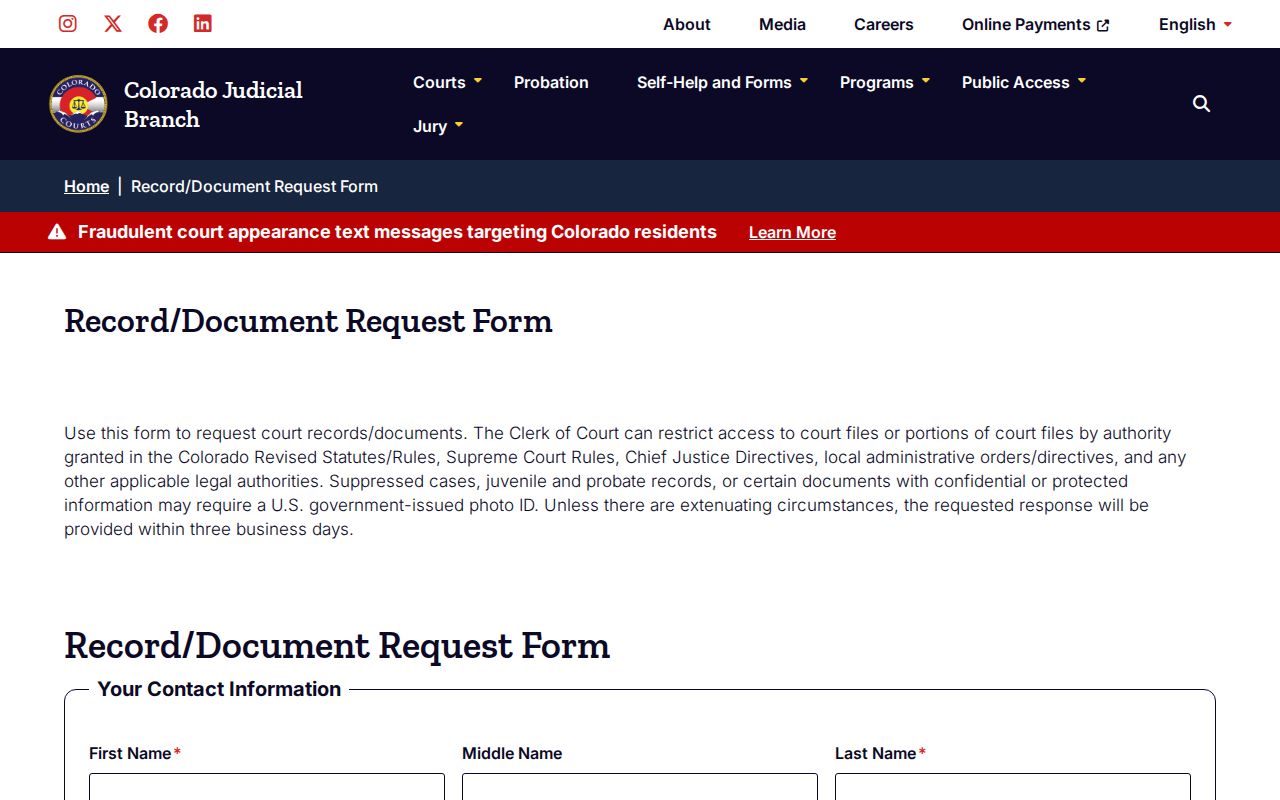
The form image reinforces the next step: preserve the case number, county, year, party, and requested document type before sending a copy request.
Docket row inventory.
- Hearing date, time, duration, type, and courtroom.
- Party name, case number, location, and appearance type.
- Export or printable controls, with results split across pages.
- No automatic promise of a complete case file or older hearing history.
Larimer Vital Records Access
Birth, death, marriage, and divorce records are separate paths. Colorado vital records are confidential under C.R.S. 25-2-117, so a name match does not create a right to a certified copy. Direct and tangible interest, relationship, identity proof, and the record custodian control. The Larimer birth-certificate route serves Colorado births from 1900 to the present at 1525 Blue Spruce Drive in Fort Collins. Appointments are used for in-person service; mail and online routes are also documented.
The local birth office lists 970-498-6710, Monday through Friday from 8:00 a.m. to noon and 12:30 to 4:15 p.m. Typical processing is two to five business days, excluding shipping. For 2026, the first certified birth copy is $25, additional copies in the same order are $20, and the online vendor adds a $7.50 surcharge. An acceptable photo ID and relationship proof may be required.
Marriage information follows the Larimer Clerk & Recorder marriage route. A license costs $30, is valid for 35 days, and must be returned within 63 days. A copy request uses the reception number, both full names, and ceremony date. Colorado State Archives identifies Larimer marriage collections from 1867 through 1959. Divorce records are court records with separate restrictions and series, so a marriage record cannot be used to infer a divorce.
The current death-record opening rule was not confirmed in the research. Use CDPHE and the applicable Archives or court instructions, and do not publish an age-based assumption. Obituaries, cemetery books, directories, and newspapers can guide a request, but they are not certified vital records.
Larimer Voter Lookup Limits
The Colorado public voter lookup asks for First, Last, ZIP, and Birthday in MM/DD/YYYY format. It can confirm a registration match under the voter-record rules, but it is not a named street roster and it does not disclose a vote choice. The lookup advises trying the last ZIP after a move and contacting the county when no match appears. Confidential voters and people under 18 may not appear.
Potentially public voter fields include full name, residential address, party and party date, phone if provided, gender identity if provided, birth year, and prior participation. Social Security number, driver-license number, month and day of birth, signature, and email are confidential. Address Confidentiality Program participants and other protected voters can be omitted from ordinary output.
Larimer Elections at 200 W Oak Street, Suite 5100, uses elections@larimer.gov and 970-498-7820. Its data route offers DP-002 precinct splits, DP-003 voter counts by party, district, and precinct, VR-011 current lists by county, district, or precinct, EX-004 five-election activity, maps, and custom research. Files may be PDF or delimited text and can use secure FTP. A request for a specific individual goes through the county public-record route rather than a casual ZIP search.
Precinct reports describe election geography and aggregate participation. Revised results and redacted cast-vote records do not name a person’s choice. For a former resident, pair a dated directory, census, newspaper, or archive source with the voter material instead of treating a current registration match as historical proof.
Larimer Custody Records Lookup
Law-enforcement systems answer different questions. CBI’s Internet Criminal History Check is a Colorado-only name-based result, not a full court file. The public registry has its own categories, notice, and identity warnings. The Colorado Department of Corrections search is a statewide custody locator. The Larimer Sheriff Booking Report is a short-window local custody source.
The CBI Internet Criminal History Check description identifies the scope of the name result and its exclusions.
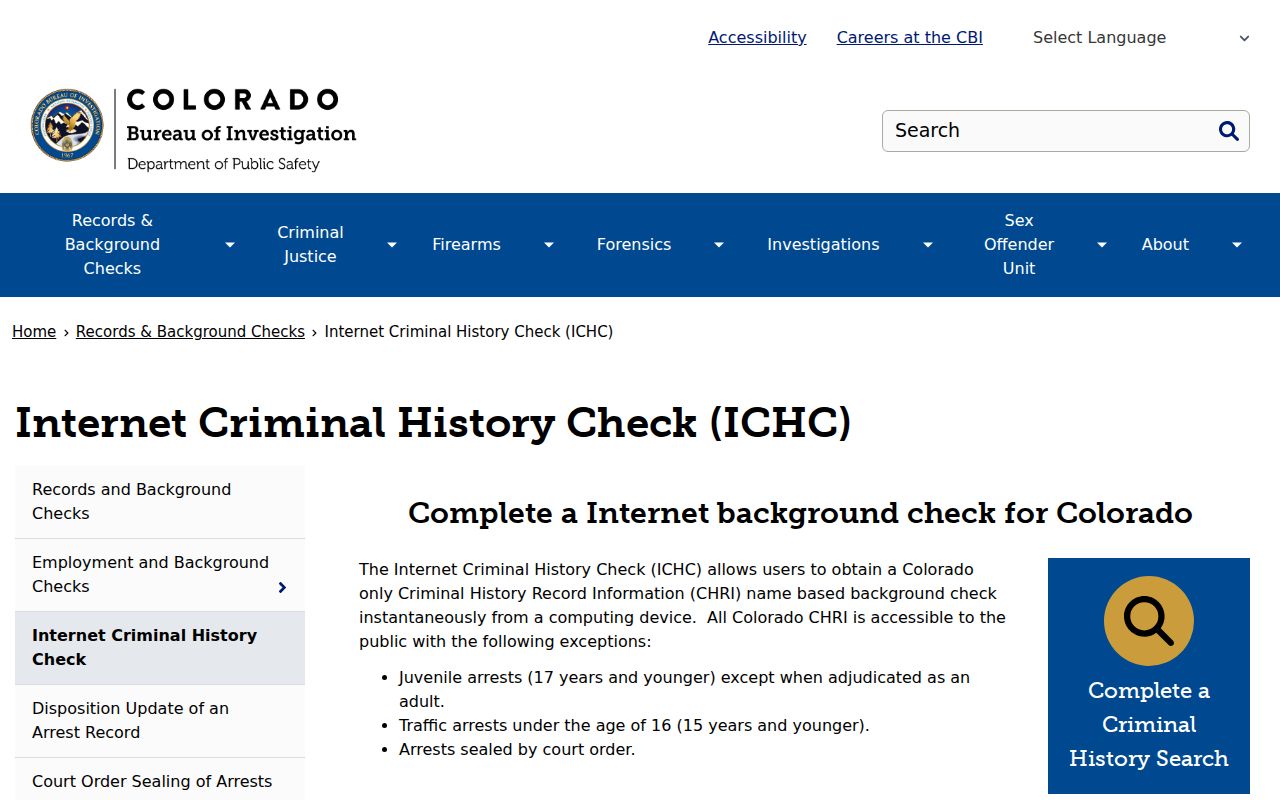
Use the CBI result as a Colorado name clue, then compare the case number, date, jurisdiction, and disposition with the court custodian. Juvenile, sealed, and other excluded material is not made visible by a name search.
The Colorado Bureau of Investigation registry publishes public search categories and a registry agreement.
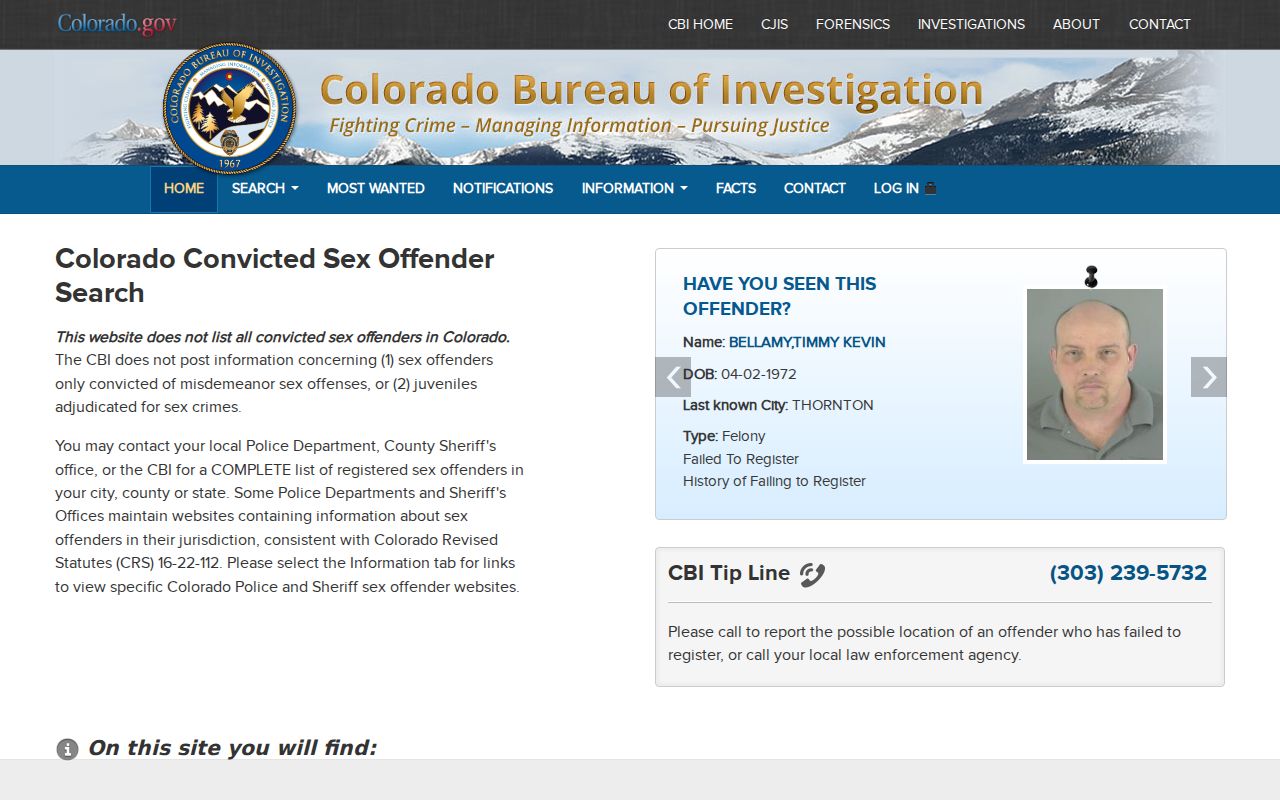
The registry says updates occur hourly but warns that identity, address, and current status are not guaranteed and that the list is incomplete. An adult-list request may involve a $20 fee and about ten business days. Registry information must never be used to confront, threaten, or harass a person.
The Colorado DOC offender search uses DOC number, last name, first name, gender, a captcha, and Submit.
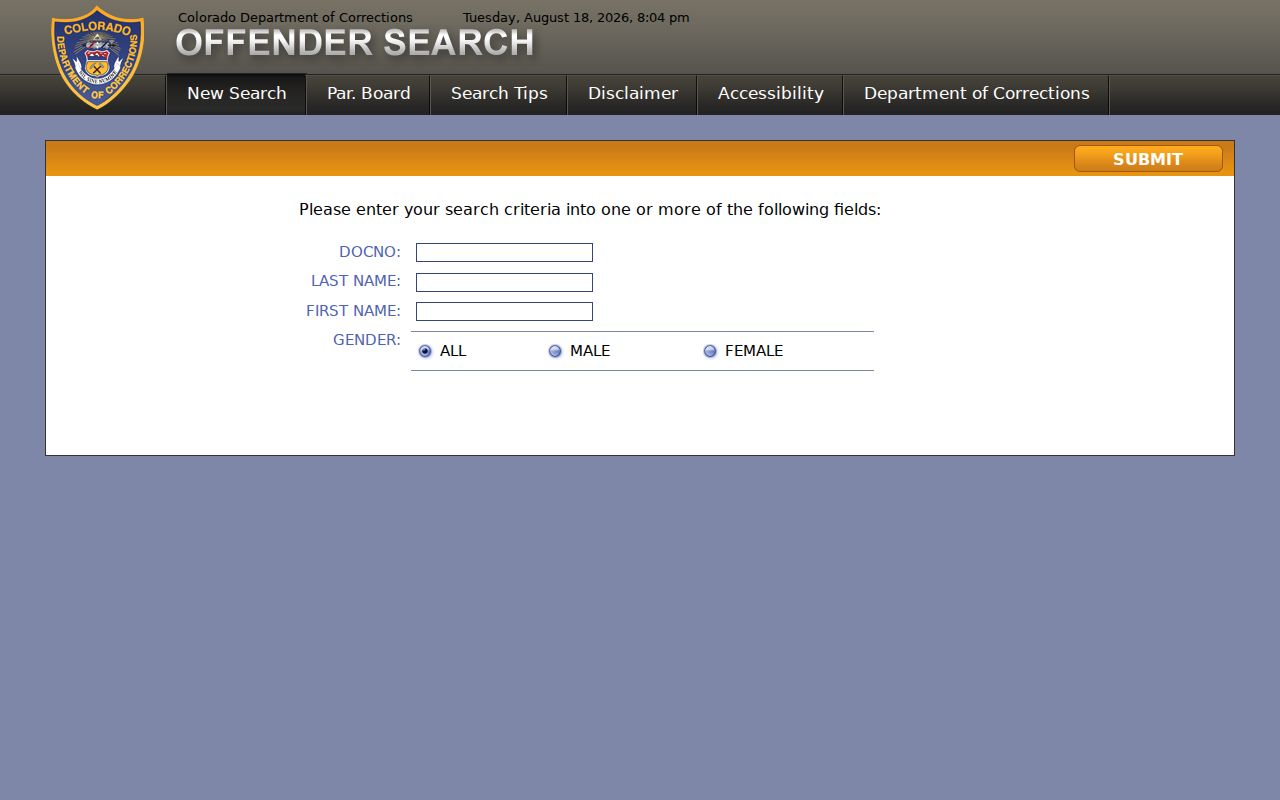
The Larimer Booking Report has Inmates, Bookings, Releases, Incident Blotter, Jail Population, and Transient or Homeless Bookings tabs. Arrest date and agency filters lead to fields such as inmate number, arrest location, charge, bond, resolved reason, and upcoming court date. Sheriff requests can cover records back to 2005, with an online or paper-drop-off route, a stated 10-to-14-day incident availability period, and a pecuniary-use statement under C.R.S. 24-72-305.5. A short roster window is not a complete criminal history.
Larimer Business Records Clues
A person can appear in a public filing without the filing proving personal residence. The Colorado Secretary of State business search accepts a business name, trademark, trade name, ID, or document number. Its advanced search adds filing dates, business, trade-name, or trademark exact matching, agent or registrant fields, individual last, first, middle initial, and suffix fields, organization name, sorting, and pagination.
The individual trade-name form lists a $20 filing and asks for the filer’s true name, street and mailing address, trade name, business description, delayed effective date, attachments, notices, and additional individuals. Preserve the filing date, document number, entity type, and registered record. A filing is a registration event, not proof that a business is currently operating or that a filer lives at the listed address.
DORA’s public Web Lookup and Verification accepts profession, license type, license number, status, last name, and first or middle name, with a person or facility option and wildcard behavior. Public verification does not cover every occupation, and a name match should be checked against the profession and license number. These systems can support a clue in a resident lookup, but they should not replace an identity anchor from a parcel, court, directory, or vital record.
Verify a Larimer Resident
A disciplined Larimer County resident lookup moves from a broad clue to a narrow record. Keep the source purpose in view. If the question changes from one person to the people along an address, use the Larimer County by-street records route. For a former resident or family-history trail, the Larimer County city directories provide the historical shelf instead of forcing a current record to answer an old question.
- Define the target with name variants, time period, municipality, and the question to be answered.
- Anchor the name to an assessed parcel, a known voter ZIP, a directory year, a business ID, or a court case number.
- Run the strongest official or archival index and save the exact fields, source date, URL, and result identifier.
- Cross-check with a separate record purpose, such as a Recorder instrument, newspaper, docket, or eligible vital copy.
- Label uncertainty when the record is an owner, mailing contact, historical occupant, scheduled party, or name-only match.
- Request the underlying document from the custodian when an index row cannot answer the question.
Three terms keep the result honest:
- Docket
- A court schedule or hearing index. It points to an event and case number, not automatically to every filed paper.
- Index versus image
- An index is a searchable pointer with fields such as name, date, type, and reception number. An image is the recorded or filed document and may require registration, payment, ID, or eligibility.
- Certified copy
- A custodian-issued copy marked as an official copy. It is different from a directory scan, an index row, or a plain downloaded page.
Larimer Lookup Privacy Boundaries
Privacy rules differ by source. Assessor data is assessment information, not a title guarantee or an occupancy list. Recorder indexes can expose grantor, grantee, date, and legal-description fields, while images may contain protected or redacted material. Court, vital, and voter systems have their own protected categories. A person may be absent because of confidentiality, age, sealing, jurisdiction, non-indexing, a recent move, or an ordinary name mismatch.
Lawful personal use. Use a Larimer County resident lookup for lawful personal research, family history, records verification, or civic understanding. Do not use a record to stalk, harass, intimidate, threaten, or harm anyone.
Colorado’s Address Confidentiality Program at dpo.colorado.gov/ACP provides a substitute address and mail forwarding for qualified participants. Larimer’s voter-record confidentiality form protects the voter-record address but does not automatically shield every other record. The Clerk & Recorder also has a route for specific recording redaction requests. These programs are not ordinary opt-out buttons for a public record.
The Colorado Privacy Act took effect on July 1, 2023 and applies through thresholds and controller duties. Public government data is excluded from the personal-data definition for that purpose, so it does not create a universal deletion route from county Assessor or Recorder records. Use only the fields needed for the research question, date the result, and send correction or access questions to the custodian that holds the record.
When an online index does not surface a county record, the Colorado Open Records Act, C.R.S. 24-72-201 et seq., supplies a request route subject to exemptions. Larimer procedures accept a narrow request by email, fax, mail, or hand delivery; the normal response is three working days, with a possible seven-day extension, and fees or an estimate may apply. Name the office, date range, record type, and preferred format.